Do you think Tudor is cool? Well, personally Im starting to doubt it. Tudor wanted to make me believe it's a cool brand, and for quite some time, it succeeded. But now, with the introduction of the Black Bay Pro, it feels that Tudor finally shows its real face once more. The new GMT watch, which looks so very much like the coveted Rolex Explorer II 1655 Freccione, marks a return to Tudor's old self. Whereas a Black Bay Fifty-Eight in navy blue, for example, gives you the feeling you're looking at an original design, the Black Bay Pro represents a different reality. Yes, though your watch might look like a Rolex, it is, in fact, a Tudor a more affordable version. Is Tudor again offering a sort of poor man's Rolex, exactly as Hans Wilsdorf intended? Has the old order been restored? Is everything back to normal again?This year, Tudor celebrates the 10th anniversary of the Black Bay. When Tudor introduced the Heritage Black Bay ref. 79220R the R is for Rouge it marked the start of a remarkable rise in popularity of the brand. Tudor became cool and desirable thanks to the hypnotizing vintage vibe surrounding the numerous Black Bay watches that came out after that quirky burgundy one. That must have been quite the experience for the people working at Tudor. Cool was not a word often heard to describe Tudor watches. And the overwhelming positivity with which the watched were written about must have been a thrilling, even shocking first-time experience.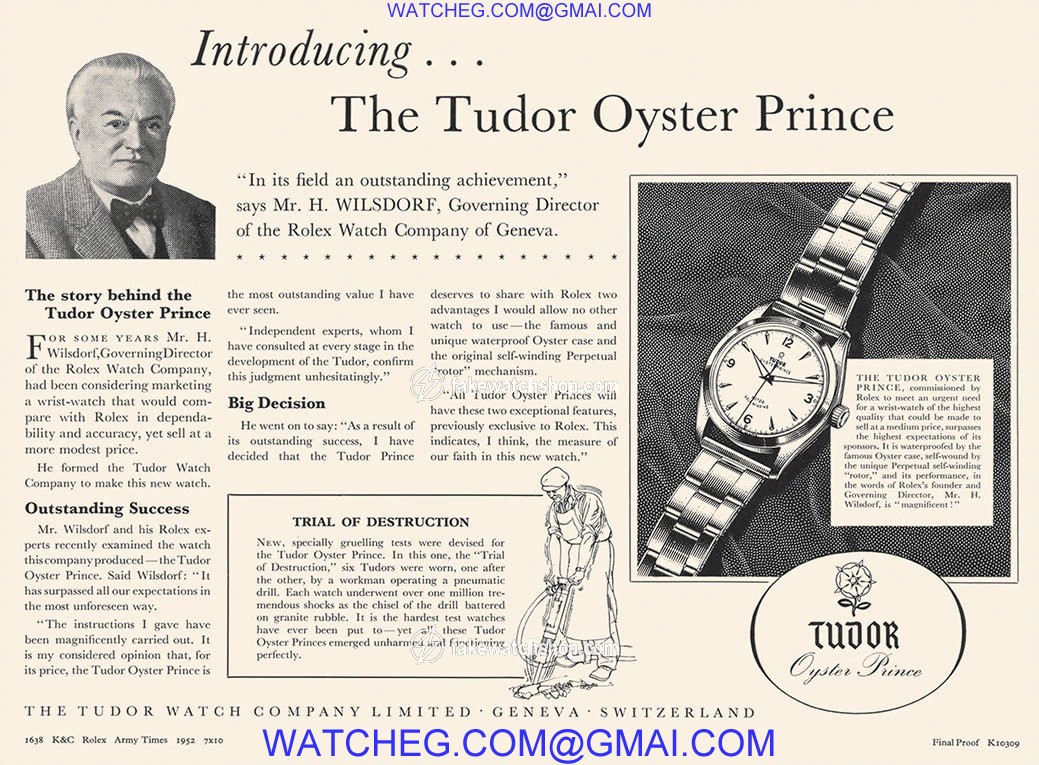 Tudor shows its real face againBut Tudor being cool was never Hans Wilsdorf's intention. Back in the days when Rolex founder Hans Wilsdorf set up the Tudor brand, cool was merely a meteorological situation, not a qualification of stuff or people. Wilsdorf had been pondering the idea of creating a watch at a more modest price point than his Rolex creations. Theyd be more affordable watches that would appeal to a larger audience, but theyd be just as reliable and dependable as Rolex watches. a symbol of royalty, but not as regal as the crown on a king's head.For Tudor, it all started in February 1926 when the trademark The Tudor was registered in Geneva for Hans Wilsdorf by the widow of watchmaker Philippe H? ?ther. Ten years later, Wilsdorf had the name fully transferred to himself, and Tudor got its rose-and-shield logo. Just like the Rolex coronet, it was a symbol of royalty, but not as regal as the crown on a king's head. And in 1946, Montres Tudor S.A. was born. Early advertising for Tudor watches shows both the rose-and-shield logo and the rose-only logo that took its place shortly thereafter.
